By Dr Ruth Powell
Faith, Research, and a Heart for Mission in Australia
If you were to scroll through my family’s group chat, you’d find my name listed as ‘Survey Lady.’ It’s become a running joke, because recently someone once came up to me and said, “I know you — you’re the survey lady!”
And yes — that’s me. I’ve spent much of my life listening to the Australian church, asking questions, gathering data, and turning it into stories that help us see what God is doing in our nation. However, before I was ‘Survey Lady’, my identity was ‘Mission Kid’.
The Imprint of Mission
I grew up in the highlands of Papua New Guinea, the daughter of missionaries. My parents’ faith and work shaped me profoundly — not just their words, but their lives. Their love for people, their deep sense of call, and their perseverance in difficult circumstances gave me an enduring conviction: that to be in relationship with God is to participate in His mission.
That sense of mission is part of my DNA. It’s in my story, and it’s in the way I see the church. When I stand back and look at the landscape of faith in Australia, I don’t just see data points or trends, I am hearing the voices of people.
One way to think about the role of research for mission is that it is like the instrument panel of a plane. When we are flying over unknown terrain – and there may be fog – these indicators can help us navigate faithfully, and make decisions. Research, in that sense, isn’t just about numbers; it’s about discernment. It helps us see what’s really going on beneath the surface, so we can respond wisely to God’s movement in our communities.
The Beauty and the Brokenness
Over more than three decades of leading the National Church Life Survey, I’ve seen the beauty and the brokenness of the church. I know the struggles, the failures, the internal divisions. And yet, I love the church more than ever.
Because even with all its imperfections, the church remains one of the most extraordinary forces for good in Australian society. Churches offer meaning and belonging in a world starving for both. They quietly serve through counselling, food relief, and community care. They nurture generosity, deepen hope, and create space for people to encounter purpose.
Our data shows this clearly: people of faith report higher wellbeing, volunteer more, give more generously, and are more hopeful about the future than the average Australian. Faith still changes lives.
The Pressure and the Loss
And yet, we’re living through a time of pressure — both global and local — that has left many faith communities reeling.
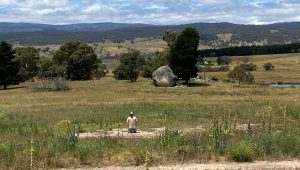
The 2020 bushfires that swept through our family property in Monaro country are a picture of this for me. The land was scorched; the buildings were gone. It was heartbreaking. But it also mirrored what I see happening across our churches. Forces far beyond our control — secularisation, moral failures, cultural conflict, declining trust — have burned through our landscape, leaving us grieving what’s been lost.
When we look at the data, we can see the signs of this loss. Church attendance has dropped significantly since the 1950s, and outreach has declined steadily over two decades. We’ve become more insular, less confident, and less connected to our communities. The gap between the church and the neighbourhood has widened.
Many Australians no longer know that Jesus was a real person in history. Fewer believe religion is good for society. And fewer still feel the church is a place where they belong.
It’s sobering — but it’s also a call to renewal.
Seeds Beneath the Ashes
When we returned to that burnt-out property, we found signs of life. Tiny green shoots were pushing through the ash. Seeds that had lain dormant for decades were germinating because of the heat.
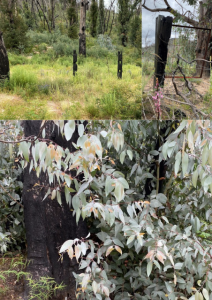
That image stays with me. Because even in a time of loss, I see new seeds of faith taking root across Australia.
Our research shows that while formal religion is declining, spiritual openness remains high. Six in ten Australians believe in God or a higher power. Many pray. Many describe mystical or spiritual experiences. And among younger generations, curiosity about faith is growing — not returning to church as it once was, but exploring faith afresh, without the baggage of the past.
It’s particularly interesting to see young men becoming more open to Christianity as something good for society. Young women, meanwhile, are still cautious — and rightly so, after generations of exclusion or harm. We must listen, repent, and rebuild trust. But there is movement, there is interest, and there is hope.
What Is the Good News Now?
The missionary in me always asks: what is the good news here, in this time and place?
In Papua New Guinea, the good news for women was that they were made in the image of God — that they had worth, dignity, and power. The good news for men was that they didn’t need to fear the spirits; that the Holy Spirit was stronger, bringing freedom instead of fear.
So what is the good news for Australians today? Perhaps it’s that you are not alone. You are not worthless. You are not beyond grace. You are deeply loved, made in the image of God, and invited into His renewing work.
That’s the message we need to rediscover — not one of withdrawal or defensiveness, but of humility, courage, and hope.
A New Day
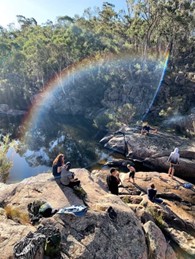
I have a photo of our extended family sitting beside the river — with a rainbow arching over them. It was a moment of grace, a reminder that even after fire, God is doing a new thing.
The same is true for the church. The landscape is changing, but God is not finished with us. I believe this is a time for replanting, reimagining, and rebuilding — for new wineskins that can hold new wine.
Our call is to take up a posture of humility and confidence — humble enough to admit where we’ve failed, confident enough to say that the gospel is still good news for our world.
Because despite everything, I remain convinced: faith still makes a difference. The church still matters. And God’s mission continues — in me, in you, and in the life of His people across this land.