
church planting
God is doing something new among Gen Z (born 1995-2009). The data is still coming in on whether we could be seeing early signs of a revival, but ministry practitioners with their ear to the ground can see the spiritual significance of this moment. Right now, there’s a gap between that fertile ground and those God has entrusted to cultivate the harvest. Those leading churches and ministries don’t seem to get Gen Z. Some of you have insight through your kids and some are diligently keeping up with cultural trends, but many of you desire to grow in your understanding. Hopefully I can help bridge the gap through this Gen Z series as I cover understanding and reaching Gen Z across 8 short articles.
I’ve had the unique honour of leading among Young Adults while being one myself for over 10 years. My focus in ministry has been mobilising Christians for evangelism and I’ve never been more optimistic! Not only because of what I’ve seen of God’s work among this generation but because of you. You care about the Lord’s harvest, you want to see Gen Z won for Christ.
I hear church leaders describe Gen Z and realise they are pulling on ideas that are more suitably attributed to Millennials AKA Gen Y (born 1980-1994). There are commonalities among young people but we also have unprecedented generational differences that correspond with the rapid rate of our changing world. Below are the most relevant contextual distinctions we need to make for the purposes of evangelism to unchurched Australia.
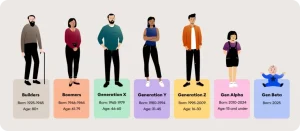
Image: mccrindle.com.au/article/topic/demographics/the-generations-defined/
Disenchanted Millennials vs. Curious Gen Z
Millennials were the last generation in history who became adults with hope for their futures; assuming the world would generally get better. Gen Z was the first generation that didn’t think it would. Millennials were told to follow their hearts and they could make a difference Gen Z were told the world is on fire and there was nothing they could do about it. Millennials have a lot to be disappointed about including religion. Gen Z are looking for transcendence and think that religious people are interesting.
In Australia, both Millennials and Gen Z were both raised in a secular landscape but Millennials carry a religious baggage that doesn’t encumber Gen Z in the same way.
Millennials heard about the Royal Commission into Child Sexual Abuse and religious abuses of power in real time for most of their lives. Gen Z lives in its shadow which has given us a distaste for institutional religion but we’ve been raised in a world where there are established social and legal standards to keep kids and vulnerable people safe.
Millennials were teenagers and adults leading up to the legalisation of Same Sex Marriage and have stood up to homophobia (both real and perceived) that cites Christianity as it’s source. They have mediated and destigmatised progressive sexual ethics, mental health awareness and other matters of justice. Apart from a growing subsection of Gen Z men influenced by the manosphere, the majority of Gen Z assumes the social progress they inherited as normal and positive. Gen Z is twice as likely as the rest of the adult population to identify as queer (Kapernick & Evans, 2024).
Millennials were exposed to a time where Christian ideas were more socially dominant, but Gen Z has been raised in an even more secular and diverse world. Aussies have low Biblical literacy and awareness of Christian beliefs, and this becomes more and more true the younger you are. Millennials are more likely to assume they know what they are rejecting, even if that is limited or skewed knowledge. Gen Z generally knows that they are ignorant about the Bible or Christian beliefs.
Objections towards Christianity are common across the generations: suffering, church hypocrisy and sexual ethics, and yet, Gen Z is far more earnest, curious and less critical towards faith. They are more open to spiritual conversations (McCrindle, 2017, 24) and 9% more likely to claim Christian affiliation than millennials (Australian Bureau of Statistics, 2022).
The grown ups of the world have always rolled eyes at the emerging young generation, but never more so than Gen Z. Gen Z Expert, Dr Tanita Tualla Maddox of Young Life USA surveyed hundreds of Gen Zers how they hear their generation described and they answered without a single positive descriptor: weak, fragile, snowflakes, entitled, self-centered, over-emotional, confused, anxious (Maddox, 2025,14). This is the story that has shaped Gen Z’s reality and informed our sense of self as we’ve come of age. Our elders have disparaged us, but what if church leaders returned our curiosity and openness? Imagine if we could bridge that gap of mutual understanding.
Leadership Lessons
The broader cultural narrative would lead both Church Leaders and Gen Z to believe that the other party thinks little of them. We have been sold a lie that we hate each other. Wouldn’t that be a convenient attempt of Satan to obstruct what God might be doing at this time?
Practically, it means that the evangelistic instinct of decades past: addressing objections and apologetic tools will not resonate with Gen Z. They are the most open, curious and positive generation, so our first line of engagement should facilitate the encounter of Jesus through Christian community. You know how to do this! It’s the bread and butter of Church leadership.
References
Australian Bureau of Statistics. (2022). Religious affiliation in Australia. abs.gov.au/articles/religious-affiliation-australia
Kapernick, K., & Evans, J. (2024, November 19). Increasing number of gen Zs identify as LGBTQIA+ as awareness improves. ABC. abc.net.au/news/2024-11-20/btn-high-increasing-number-of-gen-zs-identifying-as-lgbtqia/104612994
Madden, C. (2017). Hello Gen Z: Engaging the Generation of Post-millennials. Hello Clarity.
Maddox, T. T. (2025). What Gen Z Really Wants to Know about God: Seven Questions about Life and Faith. InterVarsity Press.
McCrindle, M. (2017). Faith and Belief in Australia. McCrindle Research. mccrindle.com.au/app/uploads/2018/04/Faith-and-Belief-in-Australia-Report_McCrindle_2017.pdf